How Long Do NDIS AT Requests Take in 2026, and What Can You Do While You Wait?
Explore how long NDIS assistive technology (AT) requests typically take in 2026 across low, mid and high-cost items. Learn what evidence the NDIA expects, why high-cost AT like power wheelchairs is often delayed, and practical steps you can take—trials, rentals and low-cost interim supports—while waiting for approval.
2/6/20264 min read

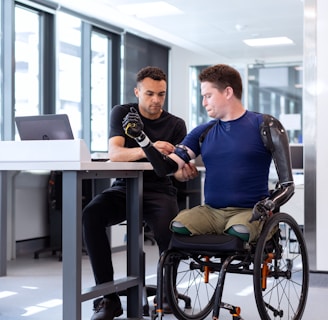
NDIS Assistive Technology (AT) timing in 2026 depends mostly on cost and risk/complexity. The NDIA uses three cost bands—low cost AT (under $1,500), mid cost AT ($1,500–$15,000), and high cost AT (over $15,000)—and also considers whether the item is “low risk” or “higher risk” (for example, a power wheelchair is a higher risk AT example).
Low-cost AT is generally the fastest because it’s designed to be simple and low risk, and sits within your plan funding rules.
Mid-cost AT usually needs written evidence (including a cost estimate) when it’s over $1,500, but the NDIA says you don’t need quotes under $15,000 (quotes are required only over $15,000). See the NDIA’s participant guidance on mid cost AT evidence and quotes and the provider guidance on written evidence over $1,500 and quotes over $15,000.
High-cost AT (power wheelchairs, major transfer systems, vehicle-related AT) typically takes longer because the NDIA requires a professional AT assessment and a quote when AT is over $15,000. (NDIA requirement for assessment + quote over $15,000)
If your AT request needs a formal plan change or reassessment decision, it may also be affected by the NDIA’s Participant Service Guarantee timeframes (for example, the NDIA publishes timeframes for “make changes to a plan” and “plan reassessment” decisions).
While you wait, you can often keep moving by using plan-funded options for trial, rental, or short-term supports, and by submitting a more complete evidence pack upfront (so the NDIA doesn’t have to come back and ask for missing information).
Why Are High-Cost Assistive Technology Delays So Common?
The NDIA treats expensive AT requests as major capital decisions that must meet the reasonable and necessary criteria. For higher risk or high-cost items (for example, complex systems like a power wheelchair), the NDIA may need more detailed information to confirm the AT is safe, appropriate, and value for money.
Common “delay multipliers” include:
Professional assessment requirements: For AT costing more than $15,000, the NDIA states it requires an assessment by a professional AT advisor and a quote. (NDIA requirement for assessment + quote over $15,000)
Evidence requirements: For AT valued more than $1,500, the NDIA requires written evidence (and for mid-cost AT, it still needs evidence and a cost estimate even though it generally doesn’t require quotes under $15,000). (Mid-cost evidence and quotes rule; provider guidance on evidence/quotes thresholds)
Risk/complexity checks: The NDIA uses AT risk guidance (low vs higher risk) to set minimum advice/training expectations. (NDIA AT product risk overview)
In practice, time can be added at each step—assessment appointments, trials, report writing, and follow-up information requests—especially when a request is submitted without the minimum evidence the NDIA expects for that cost/risk band.
What You Can Do While Waiting for a Wheelchair or Scooter: Interim Solutions
Short-term trial or hire while approvals are in progress:
The NDIA explicitly recognises that for some AT it can be better to rent, borrow, or trial first—particularly when your needs are likely to change. (NDIA guidance on trial/rental and changing needs)
For short-term solutions, see the NDIA’s Guide for minor trial and rental funding and its information on accessing AT through rental, loan, subscription or other arrangements.
Use low-cost AT to bridge the gap:
Because low cost AT is under $1,500 per item, many participants can use low-cost items as interim supports while waiting on a larger request—so long as the support relates to disability needs, aligns to goals, and meets reasonable and necessary.
Low-cost tweaks that reduce risk and carer strain:
Even if you’re waiting for a bigger item, smaller AT (where appropriate) can reduce immediate risk—especially where manual handling or falls are an issue. The NDIA’s overall approach is still the same: the right AT should help you do things more safely or more easily. (NDIA definition of assistive technology)
Using Core Budget for Interim Mobility Aids: Rules and Limits
Core funding is often used for everyday supports, but AT rules still apply. The NDIA’s cost thresholds are the key starting point:
The NDIA also states that participants do not need to provide quotes for AT under $15,000, but do need written evidence when the AT is valued over $1,500. (Provider guidance on evidence/quotes thresholds)
Before spending on interim items, consider whether the interim support will still be useful after your long-term AT arrives (backup chair, secondary walking aid, travel option), and keep the overarching requirement in mind: all funded supports must be reasonable and necessary.
NDIS AT Evidence: What Do I Need to Speed Up Approvals?
Participants frequently ask “what evidence does the NDIA want?” The NDIA’s baseline answer is that it needs to understand your AT needs and how the right AT will help you pursue your goals, and that evidence requirements vary based on cost and risk. (NDIA “Evidence of AT required and AT assessments” section)
A strong submission for higher-cost or higher-risk AT commonly includes:
Functional assessment report from a suitably qualified AT advisor (often an OT or physiotherapist), explaining why the AT is the most appropriate solution and how it supports goals. (NDIA AT evidence/advisor overview)
Clear justification linked to “reasonable and necessary”:
Spell out the functional problem, the outcome the AT enables, and why alternatives aren’t suitable, all aligned to the NDIA’s reasonable and necessary criteria.
Cost evidence in the format the NDIA expects:
For AT under $15,000, the NDIA says it doesn’t require quotes but does require evidence (including a cost estimate). (Mid cost AT evidence and quotes rule)
For AT over $15,000, the NDIA says it requires both a professional AT assessment and a quote. (Assessment + quote rule over $15,000)
Trial/rental evidence where relevant:
Where it makes sense, trial or rental documentation can demonstrate that the AT works in real life and that the chosen option is appropriate. See the NDIA’s minor trial and rental funding guide and its advice that some AT may be better to rent/borrow first when needs are likely to change. (NDIA trial/rental guidance)
Submitting evidence together—rather than piecemeal—reduces the chance the NDIA will pause your request to seek further information.
How Auswaycare Can Help Prepare Strong AT Evidence
Auswaycare can support participants and support coordinators by helping gather the practical inputs that typically slow AT requests down—such as structured quotes/specifications, organising trials or short-term hire where suitable, and ensuring your submission matches the NDIA’s evidence expectations for the relevant cost band. The NDIA’s own guidance highlights the importance of choosing the right AT, and notes that rental/trial arrangements may be appropriate in some situations. (NDIA guidance on trial/rental and choosing AT)
Contacts
info@auswaycare.com
Subscribe to our newsletter